
Common sense advice to staying safe in the water and from crime and what to do should the worst occur.
Esa página está disponible también en español.
Contact info for Medical, Police, Veterinary and Dental providers
In an emergency you can reach all emergency services (fire, police, ambulance) by calling 911. For detailed and non-emergency contact information and which emergency services are available and where please go to our Services page, Emergencies section.
Water safety
Our beaches can be tricky. Some are very calm and safe -- some have riptides and big waves. And sometimes these vary seasonally so a beach which might be easy swimming one day may not be the next so don't assume!
Some water safety tips:
• Ask locals or at your hotel about the conditions before getting in the water.
• Remember that other than the beach at Playa Cocles our beaches are not patrolled by lifeguards.
• Go with a buddy!
• If you get caught in a riptide or current that is taking you out, swim parallel to
the beach until you've past the current and then make your way in to the beach. Whatever you do,
don't panic and exhaust yourself — if you can't get in, stay calm and try and attract the attention
of someone on shore.
If you see a swimmer in trouble, call 911 and then call the Caribbean Guard at +506 8339 6566.
Don't be a Victim of Crime
This is mostly common sense but remember you're visiting an area where what to you are simple indulgences (an iPod, a nice watch) may look like food on the table (or drugs unfortunately) for a local who could never afford such a thing.
Here are some tips:
• Don't bring any valuables to the beach -- please, bring nothing, even if it's something you're prepared to lose, if thieves find a beach has "easy pickings" they'll be back.
• Don't walk alone at night on unlit roads or beaches, have a local business call you a taxi instead
• Keep your belongings with you at all time. Someone we knew put down his carry-on for 10 seconds after he got off the bus while he went to fetch his luggage that was stored on the bus, when he turned around his bag (and his passport, money, camera, etc) were all gone.
• Carry a photocopy of your passport with you at all times -- it is Costa Rican law that you have identification with you at all times but unless you are driving or crossing borders a copy is generally adequate. Leave the original behind in the safe at your hotel.
There are three police stations in the area. The main office in Playa Negra, an outpost in Puerto Viejo and the tourist police office located in Cahuita. Note however that regular police in Costa Rica are responsible for keeping the peace and enforcing the law, not for taking statements and solving crime, there is a separate investigative division for that (so unfortunately, formal reports of crime have to be made in Bri Bri where that office is located) but now that the tourist police office is open they should be able to help people with that process should problems occur.
 As of April 2016, there is a trial project in place where the
tourist police will be able to take criminal complains so this will allow tourists who are victims of crime to fully
report the crime at the office in Cahuita and avoid the trip to Bri Bri.
As of April 2016, there is a trial project in place where the
tourist police will be able to take criminal complains so this will allow tourists who are victims of crime to fully
report the crime at the office in Cahuita and avoid the trip to Bri Bri.
If you are a victim of crime, call 911 and then go to the tourist police or OIJ office in BriBri to report your crime.
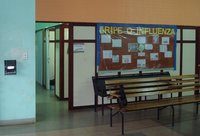
Hone Creek Clinic. Photo by Dr. Francisco Arguedas Pimentel
Health: Accidents and Travel Medical
Accidents can happen anywhere, especially when you are unused to local road conditions and driving manners (crazy at times!). So although medical care in Costa Rica is generally decent, remember that here in Puerto Viejo we're a long way from a large hospital.
There is now a full service private clinic in Puerto Viejo which offers 24 hour emergency services as well as a pharmacy and general medical services. There is also a public clinic in Hone Creek, about 5km from Puerto Viejo, where costs will be lower. Costa Rican pharmacists can also dispense directly many items without a doctor's prescriptions, so check with one of the pharmacies.
You should check whether you have travel medical coverage with your current insurance provider and with your credit cards (sometimes the credit you book your travel on will have some limited coverage).
It is worth noting that medical care in Costa Rica is much cheaper than in the USA and cheaper than in Canada and European countries. So the expense of a minor accident or even a broken bone probably won't break the bank. But in the case of a major accident or illness the expenses could certainly run into the thousands of dollars or more, if you need to be evacuated back home, for example.
In Costa Rica, there are two parallel medical systems - public and private. Both are accessible to foreigners in an emergency. The quality of care is quite reasonable in the public system but there may be a wait to access services so many people choose to use the private system even though it is at a substantially higher cost. Costa Ricans themselves are required to enroll in the public system through a salary deduction and in turn get free care.
If you need medical evacuation back to your own country, you could also be looking at a substantial expense.
If you're going to be participating in any sports activities while you're in Costa Rica (surfing, whitewater rafting, etc) make sure your policy doesn't include a waiver for those activities or, if it does, you may need to buy additional coverage.
Tropical Diseases
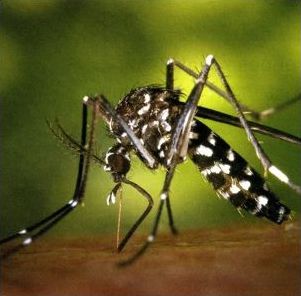
The main worry here is Dengue Fever, which is a mosquito borne illness which does occasionally have outbreaks in the area. Unfortunately there is no vaccination for this. Your best protection is to minimize the number of mosquito bites you get by applying bug repellent and/or sleeping under a mosquito net.
Costa Rica is listed as a risk for Malaria on some travel advice websites. However, this is primarily a risk if you are planning hikes deep into the forests. Taking malaria pills is not generally needed for here but check with your doctor.
Carolina
Hola, ayer me asaltaron y robaron mi bolso de la bicicleta mientras iba de cocles a playa chiquita al aproximarse con un auto. Dentro de toooodo lo que robaron, hay 3 objetos que pueden llamar la atención, ya que no los he visto por aquí, por si los ven, de alguna manera puedan dar con los antisociales
March 16, 2018
Elizabeth
Unfortunately, PV was in the news again this last week with a murdered Canadian from Toronto (http://news.co.cr/canadian-tourist-stabbed-to-death-in-puerto-viejo-limon-costa-rica/57473/). My husband and I traveled to CR from Toronto in November with our 2 children and we did not feel unsafe, although we did not travel to the east coast. We flew in/out of SJ, drove down to Dominical, up to Rincon de la Vieja and over to Playa Coco. It was a fabulous 3 weeks with thoughts of possibly purchasing a property. Be smart, and ladies, don't do anything or go anywhere you wouldn't in Canada or the US. I would agree it's 100% common sense. Don't take any chances!!
March 14, 2017
Meagan
Can anyone update me on safety in Puerto Viejo. Traveling with my family and our 3 small kids and plan to stay for 2 months. Safety is extremely important to me, so I want to be reassured that this is a good destination for us. Thanks!
September 18, 2016
MW
I just had my camera stolen from right next to me while I was sitting on a tree stump on Playa Cocles watching the ocean. Keep your things in sight or attached to you. It was either someone with some serious Ninja skills or 2 Americans with smooth moves. Two late 20s 'white guys walked past me. One on the beach in front of me and said I had a perfect spot,the other behind me was. laughing at him as he stumbled in a wave. So sad to lose my photos and be out a decent camera. Been to the area 2 other times with no problems.
February 25, 2016
Pernille
Hey! I just met this really frendly person who was Nice enough to follow me home because i was not feeling safe and I was just about to ad him on Facebook but when i locked up the gate to where i live i manage to delete hos details and I really hope that you are lucky enough to have a v. Contreras as your straff nember (everything Else i deleted by mistake.
February 14, 2016
Doug from Puerto Viejo
Tourist Police
There is now a newly opened detachment of the Tourist Police with an office in Playa Cocles. They have a number of vehicles so will be patrolling the area as well so feel free to ask them for assistance or point out anything you think seems amiss.
November 09, 2013
Sabrina from Fresno, USA
Advice
I read through some of the comments asking about the safety of PV. My sister and her friend (both 23) are currently visiting there, left July 4th and will be returning home next week. Since they've been there it's been one thing after another, unfortunately I feel like a lot could have been prevented by common sense. They've both been sick from the water so drink bottled water or boil it before drinking. My sisters friend had Dengue Fever and was pretty miserable for 2 weeks. Take lots of bug spray! They've spent a considerable amount of time in the jungle though and my sister also worked at a wild life sanctuary so they've had a lot of exposure. The worst thing was my sister was mugged coming home alone from a bar (don't walk around alone at night!) and pretty violently beat up. Ended up with a lot of face & hand wounds and a concussion from being kicked in the head several times, she was lucky he didn't have a weapon. He ended up with the equivalent of $4.00/US that she had in her pocket. This was about 3 weeks ago. On the plus side after all that they really love it there! Haha They say the locals are great and they've made a lot of friends and my sisters friend is a photographer and shes been sending the most amazing photographs from her portfolio. Sounds like a beautiful place but just be safe, especially women on their own. Don't walk around alone and be aware of the people around you. Also if anyone knows the best clinic in that area I'd be really grateful. Sister is now really sick (unrelated to all that above), not sure with what, and needs to be seen tomorrow.
September 24, 2013
Jess from Virginia, USA
Puerto Viejo Safety
My husband and I are coming to Puerto Viejo for our honeymoon late August. Reading the crime and safety issues have not made us feel very comfortable. While researching coming here we had decided that if we didn't wear flashy jewelry or look like an easy target we would be safe. It also doesn't hurt that he's a big, burly, mean looking guy. It seems though that the robberies have become more violent. Should we be worried? Also he wants to bring a taser along should a robbery escalate to violence. Bad idea???? I think so, he does not. Any feedback is welcome.
August 15, 2013
margo wilkinson from Puerto Viejo ,
Safety in Puerto Viejo
Please PM about your concerns..we can chat! Puerto Viejo is great!
August 17, 2013
Bre from USA
Cocles
Hi! I am visiting cocles soon and was wondering if there is a trusted taxi company for puerto viejo that would take us to our house in cocles? Also how is the water supply in cocles? Thanks!
June 09, 2013
Caroline from USA
Hi I am traveling to Puerto Viejo with my friend next September. Is Puerto Viejo a safe place for two women traveling? I have read the comments about robbery but want to make sure this place is O.K. for two women travelers. Is it safe to walk at night in the town? Where do we not want to go? We will be staying right in the town. Thank You.
March 11, 2013
cindy from USA
traveling iwith daughter
I am going to be in Cahuita area volunteering for the Sloth Sanctuary with my daughter. Some posts I have read (couple robbed by machete) have scared me as going alone and putting myself in danger is one thing, but bringing my daughter is another. It gets dark by 6pm and we volunteer until 3. Any suggestions as what to do or go a few afternoons?
February 23, 2013
Doug
After dark you want to stay off unlighted roads and travel by taxi. And if someone asks you for money, give it up, don't risk your life over it. Lot's of good tips above on the Health and Safety page.
February 23, 2013
Barbara from USA
I will be visiting PV and wondered how the drinking water is there. Traveling to parts of Mexico I have always ended up deathly ill from the water. I will have a steri pen this trip but wondered if there is a good chance I would have the same problems there and what I can do to avoid it. Thanks.
February 17, 2013
Doug
Well it is nothing like Mexico. Costa Rica has always put a high level of priority on public health and generally water from the public systems is safe to drink. I would never hesitate to drink tap water it in San Jose and other large centers. In Puerto Viejo it is a little trickier as some areas are on municipal water and some are on well water and the municipal water as well has been running quite low in some areas south of town as well so if there are to be any problems that would be when it would occur. That said, it will never be like Mexico. You won't get sick from a salad or something washed in the water. I find that as a visitor it is a reasonable precaution to drink bottled water but I have never had any issues brushing my teeth or cooking with the tap water.
February 17, 2013
jason from Texas
Lock Boxes at Banks
We are visiting in February and the house we have rented does not have a safe. Does the lovas BCR Bank branch have lock boxes we could rent while we are there?
January 05, 2013
Doug
You wouldn't want to deal with the bank even if they offered this service...the paperwork could take weeks! But check out the Puerto Viejo Multicentro downtown; they offer this service.
January 05, 2013
ELIZABETH from USA
I read here that Malaria pills are not needed unless planning "hikes deep into the forest." We are planning an overnight trip to Punta Mona which is a four hour hike. Would Malaria pills be advised? Thank you!
November 10, 2012
Doug
No, you'll be fine. Punta Mona is not that remote. The warning applies only to much more remote locations.
November 11, 2012
Richard from Puerto Viejo
Dentist
Anyone coming here for Dental work, should check out a fairly new, North American Standard and equipment, location is in Puerto Limon, 45 km from PV Dentists in PV and Cahuita, Limited what work they can perform Send me a request, and send you here
October 10, 2012
Load more comments